
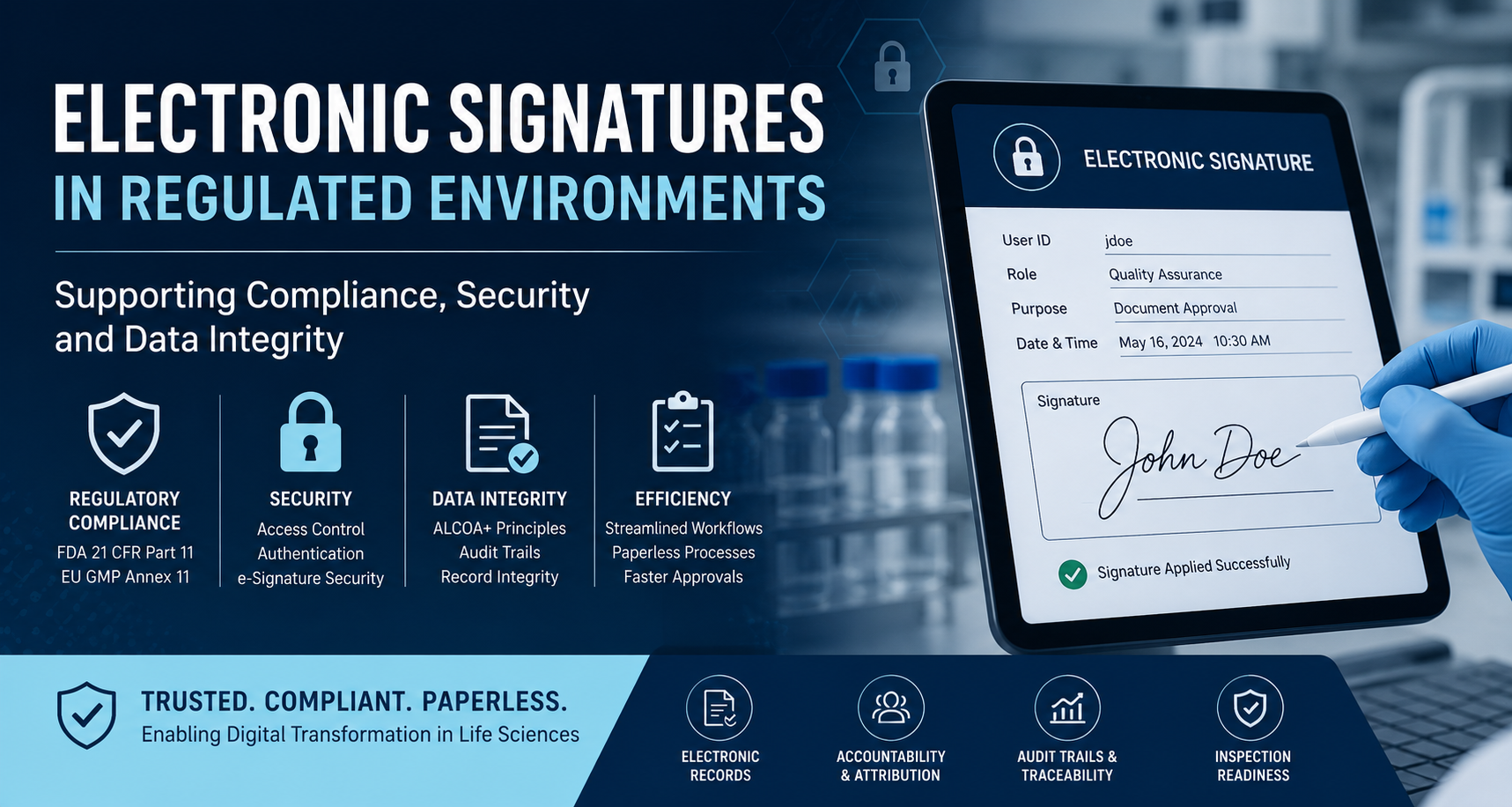
Electronic signatures have become an essential component of modern regulated environments, enabling organizations to approve, review, and manage electronic records efficiently. In industries such as pharmaceuticals, biotechnology, and clinical research, electronic signatures help ensure accountability, data integrity, and regulatory compliance. When properly implemented, they provide a secure and reliable alternative to traditional handwritten signatures while supporting digital transformation initiatives.
What Are Electronic Signatures?
Electronic signatures are digital representations of an individual's intent to approve, review, or authorize an electronic record. They are commonly used in computerized systems to replace paper-based signatures and streamline business processes. In regulated environments, electronic signatures must be uniquely linked to an individual and protected against unauthorized use. Proper controls help ensure that electronic signatures remain trustworthy, reliable, and legally equivalent to handwritten signatures.
Why Electronic Signatures Are Important
As organizations increasingly rely on electronic records, electronic signatures provide a secure method for documenting approvals and decision-making activities. They help improve operational efficiency by reducing paper-based processes while maintaining accountability and traceability. Electronic signatures also support regulatory requirements related to data integrity, record authenticity, and user accountability. Their use has become a critical component of compliance in many regulated industries.
Key Requirements for Electronic Signatures
- Each signature must be unique to an individual.
- User identity must be verified before signature assignment.
- Electronic signatures should be protected from unauthorized use.
- Signatures must be permanently linked to the associated electronic records.
- Systems should maintain audit trails for signature-related activities.
- Electronic signature records must be retained according to applicable regulations.
1. User Authentication and Identity Verification
Effective electronic signature systems require strong user authentication mechanisms to confirm the identity of individuals before signature use. Authentication controls may include unique usernames, passwords, multi-factor authentication, or other security measures. Proper identity verification helps prevent unauthorized access and ensures that signatures can be reliably attributed to specific users. This level of accountability is essential for maintaining trust in electronic records.
2. Signature Security and Integrity
Electronic signatures must be protected against unauthorized access, misuse, or alteration throughout their lifecycle. Organizations should implement security controls such as password policies, account management procedures, and access restrictions to safeguard signature credentials. These measures help ensure that signatures remain authentic and reliable while preventing unauthorized individuals from approving or modifying regulated records. Maintaining signature integrity is critical for supporting compliance and data trustworthiness.
3. Electronic Signature Linking
Electronic signatures should be permanently linked to the records they authorize to prevent separation, modification, or misuse. This linkage ensures that any signed document retains its approval history and remains traceable throughout its lifecycle. Proper record-signature association helps organizations demonstrate authenticity and accountability during audits and inspections. Secure linking also strengthens confidence in the accuracy and integrity of electronic records.
Common Challenges in Implementation
Implementing electronic signatures in regulated environments can present several challenges, including user training, system integration, access management, and compliance with regulatory requirements. Organizations must ensure that employees understand their responsibilities regarding electronic signature use and security. Proper planning, validation, and governance practices help address these challenges and support successful implementation.
Benefits of Electronic Signatures
- Reduces reliance on paper-based processes.
- Improves operational efficiency and workflow management.
- Enhances accountability and traceability.
- Supports regulatory compliance requirements.
- Strengthens data integrity and record authenticity.
- Enables faster review and approval processes.
Conclusion
Electronic signatures provide a secure and efficient method for approving and managing electronic records in regulated environments. By implementing appropriate security controls, authentication mechanisms, and record-linking capabilities, organizations can strengthen compliance, improve operational efficiency, and maintain confidence in the integrity of their electronic records.