
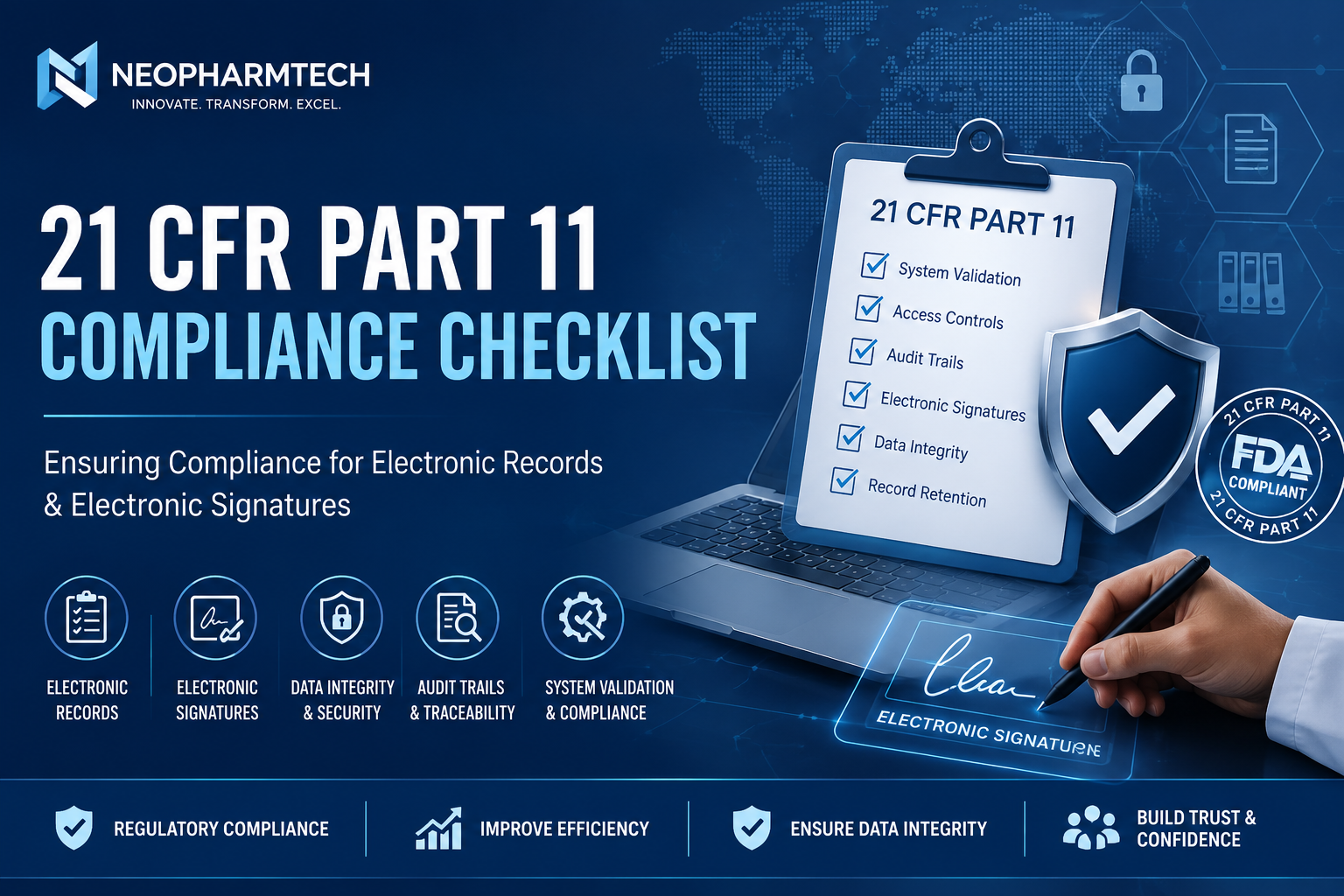
21 CFR Part 11 is a regulation issued by the U.S. Food and Drug Administration (FDA) that establishes requirements for electronic records and electronic signatures. Organizations using computerized systems in pharmaceutical, biotechnology, clinical research, and healthcare environments must ensure compliance to maintain data integrity, security, and regulatory acceptance.
What is 21 CFR Part 11?
21 CFR Part 11 defines the criteria under which electronic records and electronic signatures are considered trustworthy, reliable, and equivalent to paper records. The regulation applies to systems used to create, modify, maintain, archive, retrieve, or transmit regulated electronic records.
1. System Validation
Computerized systems used to create, process, or store electronic records must be validated to ensure they consistently perform as intended. Validation activities should include documented testing, review, and approval processes and must be maintained throughout the system lifecycle. Any significant system changes should be evaluated and controlled through appropriate change management procedures. Proper validation helps ensure data accuracy, reliability, regulatory compliance, and confidence in electronic records.
2. Audit Trails
Electronic systems should maintain secure, computer-generated audit trails that automatically record critical actions and data changes. Audit trail entries must capture details such as the user performing the action, the date and time, and the nature of the modification. These records should be retained and readily available for review during audits or inspections. Effective audit trails support traceability, accountability, and data integrity throughout the record lifecycle.
3. Electronic Signatures
Electronic signatures must be unique to each individual and securely linked to their corresponding electronic records. Organizations should implement controls to verify user identity and prevent unauthorized use of signature credentials. Signature records must remain permanently associated with the signed document and be protected from alteration. Proper electronic signature controls help ensure accountability and regulatory compliance.
4. User Access Control
Access to regulated systems should be restricted to authorized personnel through unique user accounts and authentication mechanisms. Role-based permissions help ensure users can perform only those activities required for their responsibilities. User access should be reviewed periodically and updated when personnel roles change or employment ends. Effective access control protects sensitive data and reduces the risk of unauthorized actions.
5. Record Retention
Electronic records must be retained for the required regulatory retention period and remain accessible throughout their lifecycle. Organizations should implement backup and archival procedures to protect records from loss, corruption, or unauthorized modification. Records must remain complete, accurate, and retrievable whenever needed for audits or inspections. Proper retention practices support compliance and long-term data preservation.
6. Data Security
Organizations should implement appropriate security measures to protect electronic records from unauthorized access, alteration, or destruction. Security controls may include password management, data backups, encryption, and system monitoring activities. Regular security reviews help identify vulnerabilities and ensure continued protection of regulated information. Strong data security practices support compliance and maintain trust in electronic systems.
7. Operational Controls
Operational controls should ensure that electronic systems are used according to approved procedures and intended workflows. System checks, workflow approvals, and process restrictions help prevent unauthorized or incorrect actions from occurring. These controls support consistent system operation and help maintain the accuracy of electronic records. Effective operational controls contribute to overall regulatory compliance.
8. Training & Competency
Personnel responsible for creating, reviewing, approving, or managing electronic records should receive appropriate training before system access is granted. Training programs should cover system functionality, security requirements, and applicable regulatory expectations. Refresher training should be conducted periodically to maintain awareness of compliance responsibilities. Proper training helps ensure competent system use and inspection readiness.
9. Documentation & SOPs
Organizations should maintain approved Standard Operating Procedures (SOPs) governing the use and management of regulated electronic systems. Documentation should clearly define responsibilities, security controls, record retention requirements, and change management processes. All procedures must be reviewed, updated, and controlled to ensure accuracy and consistency. Well-maintained documentation provides a strong foundation for regulatory compliance.
Why 21 CFR Part 11 Compliance Matters
- Ensures regulatory compliance with FDA requirements.
- Protects electronic records from unauthorized changes.
- Improves data integrity and traceability.
- Supports inspection and audit readiness.
- Enhances security and accountability.
- Builds confidence in electronic systems and processes.
21 CFR Part 11 in Modern Digital Systems
Modern platforms such as eCRF systems, Electronic Data Capture (EDC), Laboratory Information Management Systems (LIMS), Quality Management Systems (QMS), and Document Management Systems (DMS) support compliance through electronic signatures, audit trails, access controls, validation, and secure record retention capabilities.
Conclusion
Implementing a comprehensive 21 CFR Part 11 Compliance Checklist helps organizations maintain data integrity, strengthen security, and ensure regulatory compliance. By adopting validated systems, secure electronic records, and effective operational controls, organizations can confidently meet FDA expectations and maintain audit readiness.